
Vegan Recipe App
T-Shirts for Activists
Newsletter
Become a Member
Partner with us
Cookbooks
Petitions
Product Features
Adopt-a-Pet
Get thousands of vegan, allergy-friendly recipes in the palm of your hands today!
X
Get your favorite articles delivered right to your inbox!
X
1.9K Views
3 years ago
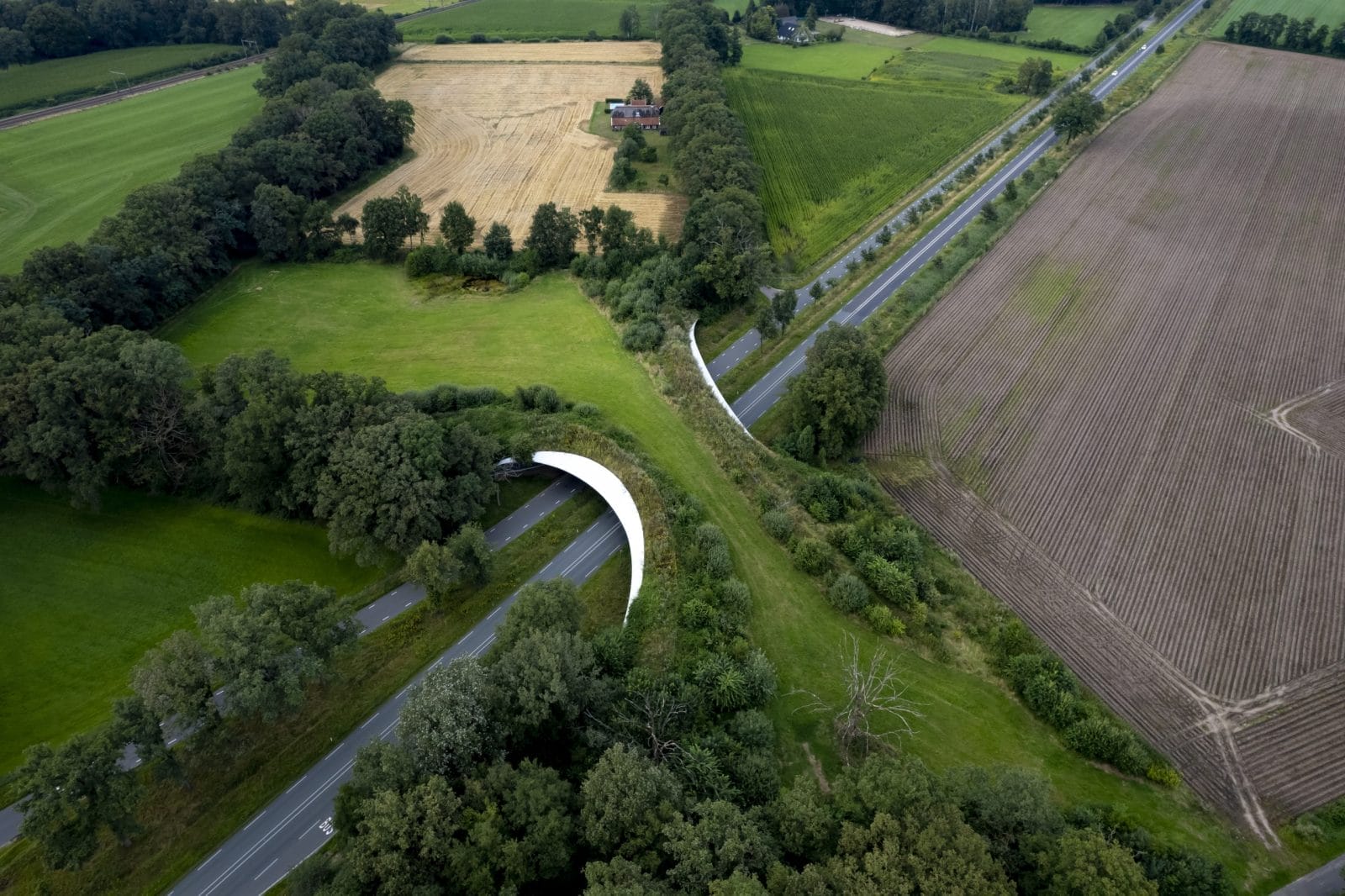
US Launches Major Wildlife Corridor Project to Protect Animals From Busy Roads
For brands
Want to reach our audience?
Did you know that in a given year, there are around 260,000 crashes involving animals and accounting for 12,000 human injuries and over 150 human fatalities? Even more heartbreaking, it is estimated that over 350 million vertebrate animals are killed by traffic in the US every year. In an effort to prevent such accidents and improve habitat connectivity, the US government is launching a pilot program to help fund the construction of wildlife corridors along busy roads.
Source: Vox/Youtube
Native American tribes, as well as state and local governments, can access $350 million in infrastructure funds for this ambitious project. The funds will be used to build wildlife corridors and add warning signs for drivers, making roads safer for both humans and animals. U.S. Transportation Secretary Pete Buttigieg is excited to announce this important step to make America’s roadways safer for everyone.
The pilot program will distribute over $111 million in the first round of grants this year. Federal Highway Administrator Shailen Bhatt believes that there are proven practices to prevent crashes between vehicles and wildlife, and this funding will enable communities to access the necessary resources for such projects.
Many Western states, including Colorado, Arizona, Utah, Nevada, and California, have already invested significantly in wildlife crossings and adopted legislation to secure federal matching funds for these initiatives. California, for example, broke ground last year on what it claims to be the world’s largest crossing—a bridge for mountain lions and other animals over a major Southern California highway.
New Mexico also joined the effort by passing legislation this spring to allocate $100 million for Conservation projects, including the state’s first wildlife highway overpasses for cougars, black bears, bighorn sheep, and other creatures.
The federal infrastructure law represents the largest investment in roads and bridges in a generation and the biggest sum ever dedicated to addressing vehicle-wildlife collisions. Technological advances have allowed wildlife managers and public safety officials to pinpoint the best locations for these crossings, benefiting both wildlife and motorists. U.S. Senator Jon Tester of Montana, who has advocated for more funding for these projects, said that investing in safer roadways would ensure that future generations can continue to enjoy the great outdoors.
Senator Martin Heinrich of New Mexico also emphasized that the migration patterns of animals like elk, deer, and mountain lions have existed far longer than paved road systems. Acknowledging and respecting these patterns can result in safer driving conditions and reduced fatalities.
So, how can you Support this fantastic initiative? Spread the word about the importance of wildlife corridors and the benefits they bring to both humans and animals. Encourage your community and local representatives to Support the construction of these corridors in your area. Together, we can make our roads safer and protect the precious wildlife that shares our planet.
Take action today by sharing this article with friends and family, and let’s work together to create safer roads for everyone while preserving our wildlife’s natural habitats. Every step counts when it comes to making a difference for our planet and its inhabitants.

Ahisma Tee By Tiny Rescue: Animal Collection
Being publicly-funded gives us a greater chance to continue providing you with high-quality content.Click here to Support Us
Related Content:
- California is Building the World’s Largest Wildlife Crossing Over 10-Lane Freeway
- Conservationists Say US-Mexico Border is Blocking Movement of Wild Animals and Causing an ‘Ecocide’
- California Set New Record For Using Nearly 100% Clean Energy
- Image of Truckload of Dead Animals Highlights Dangers of Vehicle Collisions with Wildlife
- Petition: Pressure Zoo in Pakistan to Send Neglected Elephants to a Wildlife Sanctuary
Easy Ways to Help the Planet:
- Eat Less Meat: Download Food Monster, the largest plant-based Recipe app on the App Store, to help reduce your environmental footprint, save animals and get healthy. You can also buy a hard or soft copy of our favorite vegan cookbooks.
- Reduce Your Fast Fashion Footprint: Take initiative by standing up against fast fashion Pollution and supporting sustainable and circular brands like Tiny Rescue that raise awareness around important issues through recycled zero-waste clothing designed to be returned and remade over and over again.
- Support Independent Media: Being publicly funded gives us a greater chance to continue providing you with high-quality content. Please consider supporting us by donating!
- Sign a Petition: Your voice matters! Help turn petitions into victories by signing the latest list of must-sign petitions to help people, animals, and the planet.
- Stay Informed: Keep up with the latest news and important stories involving animals, the environment, sustainable living, food, health, and human interest topics by subscribing to our newsletter!
- Do What You Can: Reduce waste, plant trees, eat local, travel responsibly, reuse stuff, say no to single-use plastics, recycle, vote smart, switch to cold water laundry, divest from fossil fuels, save water, shop wisely, Donate if you can, grow your food, volunteer, conserve energy, compost, and don’t forget about the microplastics and microbeads lurking in common household and personal care products!
Discover Our Latest Posts





Sign Up
Newsletter
Get your favorite articles delivered right to your inbox! Sign up for daily news from OneGreenPlanet.
Support
Keep One Green Planet independent — chip in what you can, or become a member and get ad-free browsing, a voice in our community, and the good feeling of fueling a sustainable, healthier, and kinder world.




Comments: