
Vegan Recipe App
T-Shirts for Activists
Newsletter
Become a Member
Partner with us
Cookbooks
Petitions
Product Features
Adopt-a-Pet
Get thousands of vegan, allergy-friendly recipes in the palm of your hands today!
X
Get your favorite articles delivered right to your inbox!
X
1.6K Views
4 years ago
This is Why the Waves in San Diego Are Pink
For brands
Want to reach our audience?
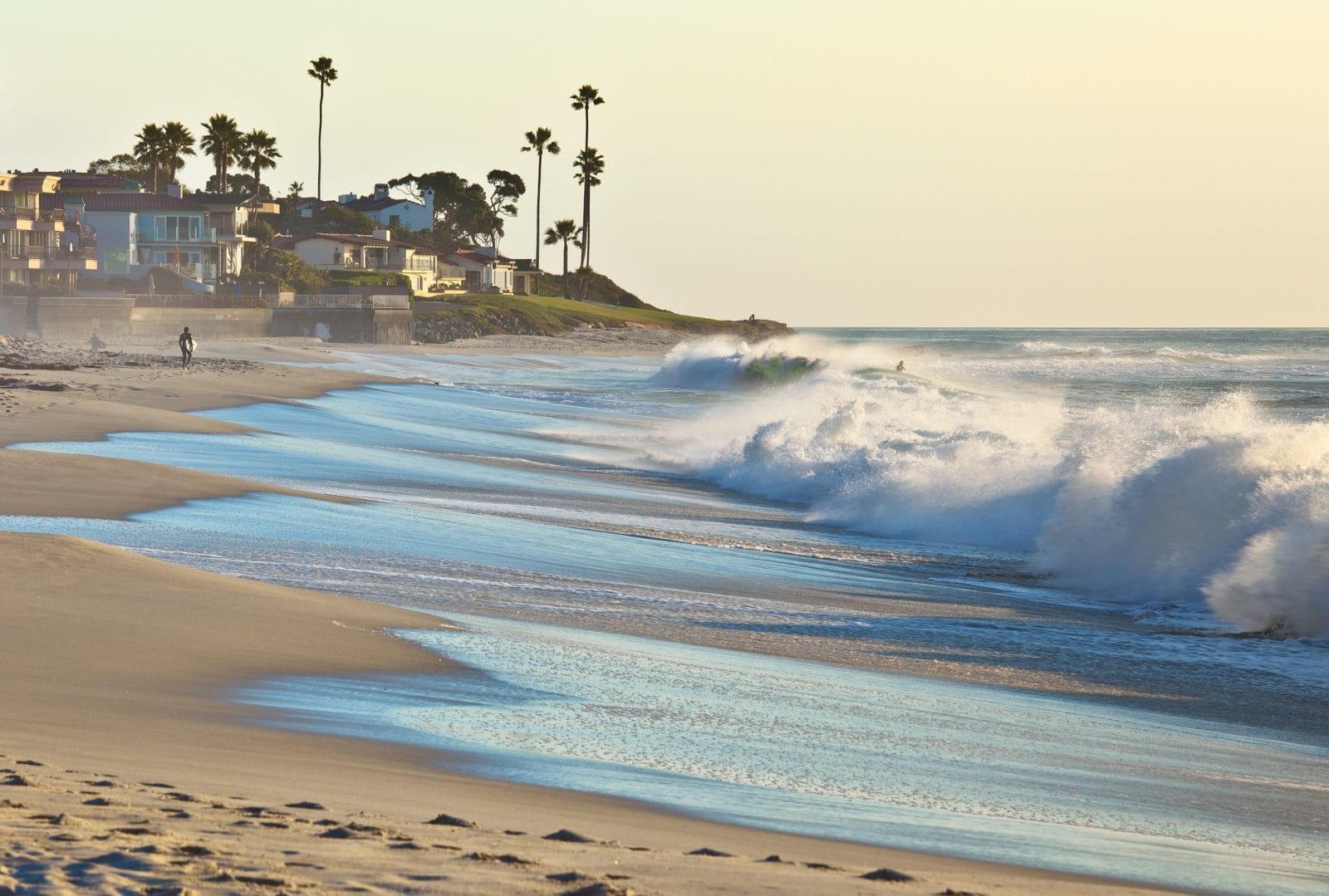
Have you ever seen the waves at Torrey Pines State Beach in California and thought they looked a little…pink? Well, you’re not imagining things! The stunning color is actually part of an exciting research project led by a team of scientists from the University of California San Diego’s Scripps Institution of Oceanography and the University of Washington.
Source: FOX 5 San Diego/Youtube
The project, called Plumes in Nearshore Conditions (PiNC), is studying the interactions between small freshwater outflows and the surf zone where waves are breaking. The goal is to better understand the way plumes of fresher water mix with the dense, saltier water and colder ocean environment.
To help them study this complex system, the team is releasing a non-toxic, environmentally-friendly pink dye into the mouth of the estuary at Los Peñasquitos Lagoon. The dye will be released three times over the next few weeks during an ebb tide, when the water level is falling and will be visible for three to six hours. The team will be using underwater and aerial sensors to detect and quantify the concentration of the dye, which will allow them to track the movement of the freshwater plume.
What makes this study unique is that previous studies have focused on large-scale freshwater plumes with high outflow, but smaller-scale plumes that interact directly with the surf zone have not been as well studied. This research is looking at the environmental impact of trapped water and the things it carries, such as pollutants, larvae, and sediment. The results could have important implications for decision-making around beach closures after rainfall events.
The team is also looking at ocean currents, wave heights, tides, salinity, and temperature to get a comprehensive understanding of the physical forces at play. They hope to see how the balance of ocean waves and river outflow determines the fate of the estuary water as it enters the coastal ocean.
So why pink? Pink dye has been used in nearshore experiments before, and it’s a useful tool because it can be seen with the naked eye and separated from the ocean water. A camera-equipped drone will also be able to track the movement of the pink water. The dye is fluorescent, which means the team can clearly see the wavelengths of absorbed light and emitted light, making it possible to quantify the dye concentration.
In conclusion, the PiNC project is an exciting opportunity to learn more about the complex and interconnected system of ocean waves and freshwater outflows. By using a non-toxic pink dye, the team is able to visualize and track the movement of freshwater plumes and better understand their impact on the environment. We can all be part of this important work by supporting sustainable practices and being mindful of the impact of our actions on our coastal ecosystems. So let’s make waves for a cleaner and healthier ocean!
Being publicly-funded gives us a greater chance to continue providing you with high-quality content.Click here to Support Us
Related Content:
- Mysterious White Spots Appearing in the Ocean
- Five Turtles Were Released Back to the Ocean After Decades of Captivity
- Florida Couple Charged After Being Filmed Throwing Kitten in the Ocean Like a Toy
- Top Source of Oil Pollution in the Ocean is Our Cars, New Report Finds
- Three Dolphins Released Back into Ocean After Spending Years of Captivity in Amusement Park
Easy Ways to Help the Planet:
- Eat Less Meat: Download Food Monster, the largest plant-based Recipe app on the App Store, to help reduce your environmental footprint, save animals, and get healthy. You can also buy a hard or soft copy of our favorite vegan cookbooks.
- Reduce Your Fast Fashion Footprint: Take the initiative by standing up against fast fashion Pollution and supporting sustainable and circular brands like Tiny Rescue that raise awareness around important issues through recycled zero-waste clothing designed to be returned and remade over and over again.
- Support Independent Media: Being publicly funded gives us a greater chance to continue providing you with high-quality content. Please consider supporting us by donating!
- Sign a Petition: Your voice matters! Help turn petitions into victories by signing the latest list of must-sign petitions to help people, animals, and the planet.
- Stay Informed: Keep up with the latest news and important stories involving animals, the environment, sustainable living, food, health, and human interest topics by subscribing to our newsletter!
- Do What You Can: Reduce waste, plant trees, eat local, travel responsibly, reuse stuff, say no to single-use plastics, recycle, vote smart, switch to cold water laundry, divest from fossil fuels, save water, shop wisely, Donate if you can, grow your food, volunteer, conserve energy, compost, and don’t forget about the microplastics and microbeads lurking in common household and personal care products!
Discover Our Latest Posts










Sign Up
Newsletter
Get your favorite articles delivered right to your inbox! Sign up for daily news from OneGreenPlanet.
Support
Keep One Green Planet independent — chip in what you can, or become a member and get ad-free browsing, a voice in our community, and the good feeling of fueling a sustainable, healthier, and kinder world.





Comments: