
Vegan Recipe App
T-Shirts for Activists
Newsletter
Become a Member
Partner with us
Cookbooks
Petitions
Product Features
Adopt-a-Pet
Get thousands of vegan, allergy-friendly recipes in the palm of your hands today!
X
Get your favorite articles delivered right to your inbox!
X
1.6K Views
4 years ago
Mysterious White Spots Appearing in the Ocean
For brands
Want to reach our audience?
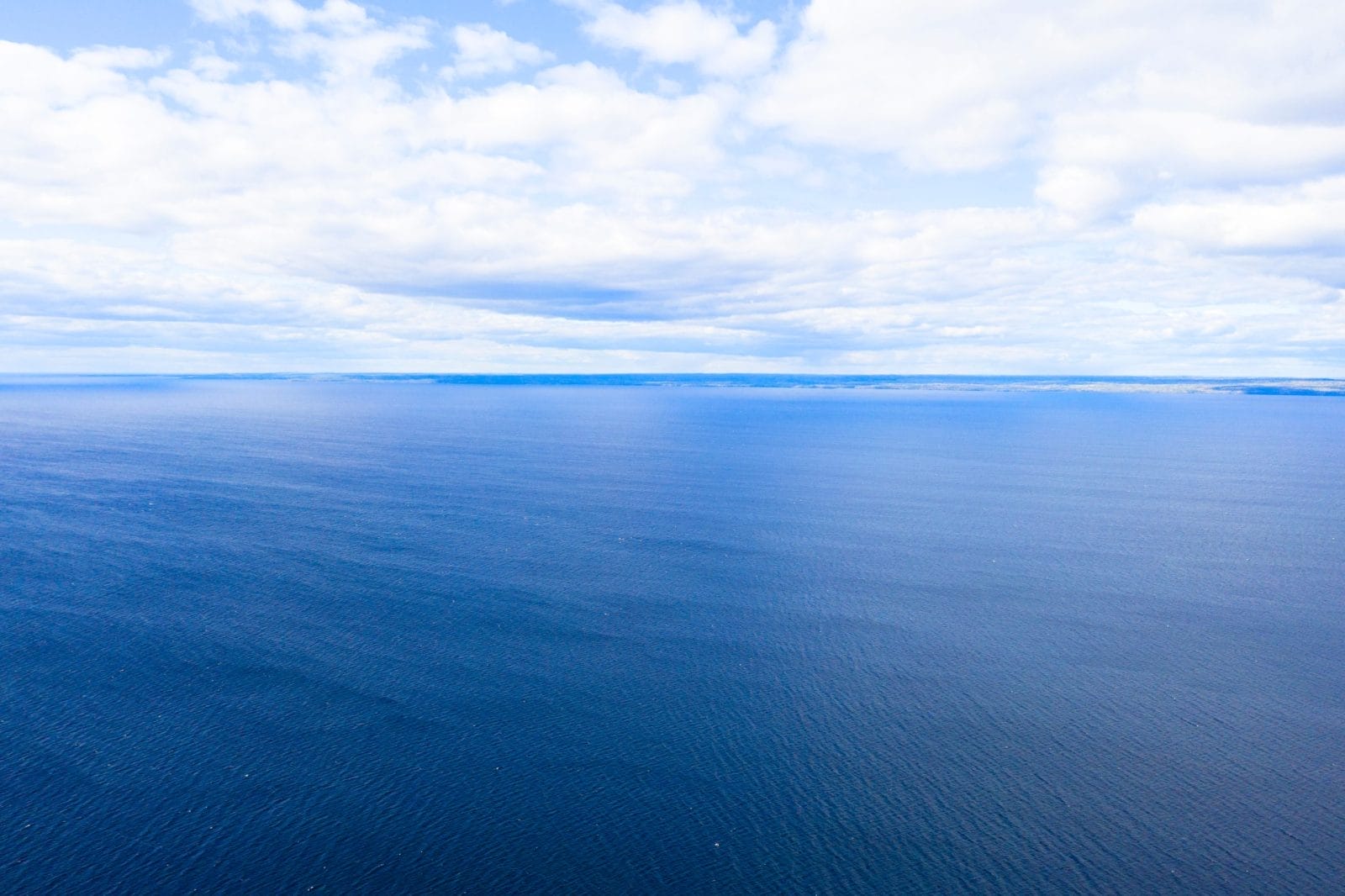
Have you ever heard of “whiting” events in the ocean? These patches of white water have been observed for nearly a century, but scientists still don’t know the exact cause of this phenomenon. A new study based on satellite observations has revealed a mysterious increase in whiting events over the past decade, with peak occurrences in 2015. But what is causing these white spots to appear, and why have they been increasing in recent years?
The study, conducted by researchers from the University of South Florida, used observations from NASA’s Aqua satellite between 2003 and 2020 to create the most comprehensive and detailed space-down view of whiting events in the shallow waters off the coast of the Bahamas. These events typically cover an area equivalent to a few hundred football fields. They are caused by fine-grained calcium carbonate that floats over the Bahama Banks, which are carbonate structures that surround the archipelago. However, scientists still need to find out why these grain clouds sporadically appear in the ocean.
The researchers trained a machine learning tool to analyze the images, revealing a mysterious increase in whiting events over the past decade and seasonal patterns in these discolorations.

Planet B Not Found T-Shirt by Tiny Rescue: Climate Collection
“In a changing climate with decreased pH (i.e., ocean acidification) and increased temperature, one would expect a slow, continuous change in whiting events,” said Chuanmin Hu, an oceanographer at the University of South Florida who co-authored the study. “However, we observed a surprise with a 10-year episode of increased whiting events.”
The study also found an extensive range of sizes and timeframes for the whiting events. Some patches vanished after a few days, while others stuck around for as long as three months. The most significant events covered more than 150 square miles, an area roughly equivalent to the city of Detroit. These substantial white patches represented the zenith of an overall increase in the total area of the whiting events that occurred from 2003 to 2015. After 2015, the occurrence of such large patches gradually tapered off, reaching an average size of about 10 square miles by 2020.
Though scientists have speculated that the phenomenon could be related to the sporadic flourishing of microorganisms in the ocean or currents that drag calcium carbonate particles to the surface, these milky splashes in the Bahamas are still an unsolved riddle. “More fieldwork is required to continuously monitor the ocean properties and processes as well as whiting events to understand better,” Hu concluded.
As we continue to learn more about the mysterious white spots in the ocean, it’s important to remember the impact that climate change and ocean acidification have on our oceans. It’s up to us to take action to reduce our carbon footprint, protect our oceans, and ensure a healthy planet for generations to come.
Being publicly-funded gives us a greater chance to continue providing you with high-quality content.Click here to Support Us
Related Content:
- Researchers Find Ancient Great White Shark, Nicknaming Her a ‘Queen of the Ocean’
- The Last Ocean: Art Installation Exploring Climate Change Debuted at Burning Man
- Biden Administration Announces Plans to Protect Oceans, Including New Marine Sanctuary off New York
- 10 Simple Actions That Just Might Save Our World’s Oceans From Plastic
Easy Ways to Help the Planet:
- Eat Less Meat: Download Food Monster, the largest plant-based Recipe app on the App Store, to help reduce your environmental footprint, save animals and get healthy. You can also buy a hard or soft copy of our favorite vegan cookbooks.
- Reduce Your Fast Fashion Footprint: Take initiative by standing up against fast fashion Pollution and supporting sustainable and circular brands like Tiny Rescue that raise awareness around important issues through recycled zero-waste clothing designed to be returned and remade over and over again.
- Support Independent Media: Being publicly funded gives us a greater chance to continue providing you with high-quality content. Please consider supporting us by donating!
- Sign a Petition: Your voice matters! Help turn petitions into victories by signing the latest list of must-sign petitions to help people, animals, and the planet.
- Stay Informed: Keep up with the latest news and important stories involving animals, the environment, sustainable living, food, health, and human interest topics by subscribing to our newsletter!
- Do What You Can: Reduce waste, plant trees, eat local, travel responsibly, reuse stuff, say no to single-use plastics, recycle, vote smart, switch to cold water laundry, divest from fossil fuels, save water, shop wisely, Donate if you can, grow your food, volunteer, conserve energy, compost, and don’t forget about the microplastics and microbeads lurking in common household and personal care products!
Discover Our Latest Posts









Sign Up
Newsletter
Get your favorite articles delivered right to your inbox! Sign up for daily news from OneGreenPlanet.
Support
Keep One Green Planet independent — chip in what you can, or become a member and get ad-free browsing, a voice in our community, and the good feeling of fueling a sustainable, healthier, and kinder world.





Comments: