
Vegan Recipe App
T-Shirts for Activists
Newsletter
Become a Member
Partner with us
Cookbooks
Petitions
Product Features
Adopt-a-Pet
Get thousands of vegan, allergy-friendly recipes in the palm of your hands today!
X
Get your favorite articles delivered right to your inbox!
X
1.5K Views
2 years ago
Study Looks into Why Cats Are Like “Liquid”
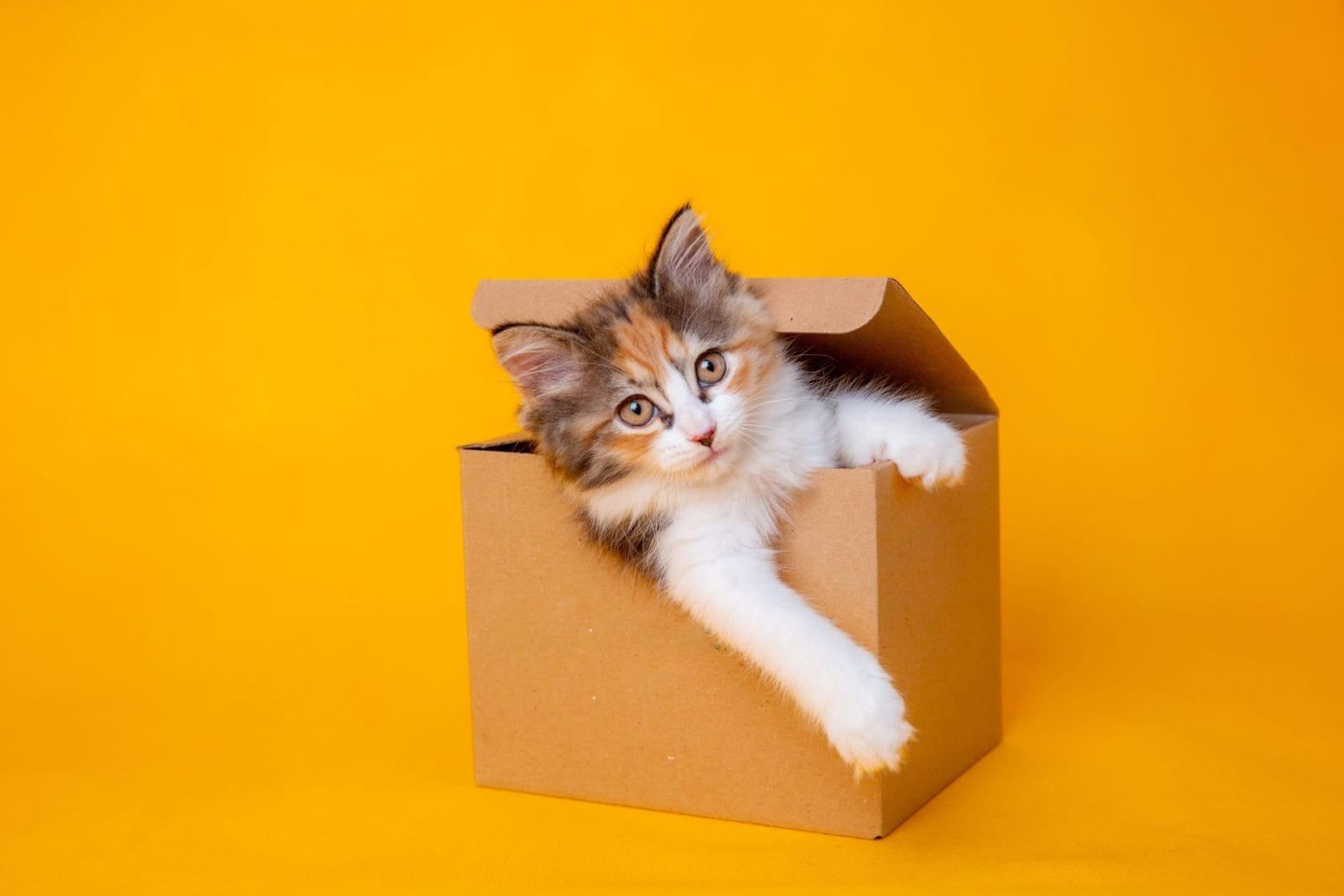
Image Credit: OlesyaPogosskaya/Shutterstock
For brands
Want to reach our audience?
Cats are often described as liquid due to their ability to squeeze through tight spaces and bend into strange shapes. As it turns out, this idea isn’t just an amusing observation—it has scientific backing. Researchers have now confirmed that cats not only have physical flexibility but also a certain level of awareness about their body size, allowing them to navigate openings with precision.
A study led by ethologist Péter Pongrácz from Eötvös Loránd University in Hungary has revealed that cats show a surprising amount of self-awareness when faced with obstacles. Pongrácz and his team designed an experiment that put cats to the test, analyzing how they deal with various openings of different sizes. The results were fascinating, offering new insights into feline behavior and cognition.
In the experiment, conducted in the comfort of the cats’ homes, Pongrácz observed how the animals reacted to boards with cut-out holes of different widths and heights. Most of the cats smoothly slid through narrow openings, even when they were only half the width of their body. However, when faced with openings shorter than their shoulder height, they hesitated and often chose alternative ways to get around the obstacle, like jumping over the board.
This hesitance, particularly noticeable in taller cats, suggests that they are aware of their own body dimensions. They seem to understand that certain openings require more caution, possibly due to the physical challenge of lowering their body to fit through.
Pongrácz noted that the height of an opening is more challenging for cats than the width. “The results indicate that cats may find it more difficult to crawl through a short opening than squeezing themselves through a tall but narrow one. Their specific anatomical features Support this theory,” he explained. The study suggests that crouching to pass through low spaces might make cats feel more vulnerable, thus prompting more careful behavior.
Interestingly, this behavior in cats parallels a similar study Pongrácz conducted on dogs in 2019, which also found that dogs show awareness of their size when deciding whether to pass through an opening. However, cats present a unique challenge to researchers. Unlike dogs, who are generally cooperative in controlled settings, cats are known for their independent and often uncooperative nature, making laboratory experiments difficult. This is why Pongrácz opted to conduct the research in the cats’ familiar home environments.
The study provides compelling evidence that cats are not only flexible and adaptable but also self-aware. Their ability to “pour” through narrow spaces like a liquid and their careful consideration of obstacles highlight their complex cognitive abilities. Pongrácz plans to continue exploring this fascinating topic, designing future experiments to further examine how cats’ awareness of their size affects their decision-making in various situations.
Please sign this petition to Demand Accountability for Woman Who Killed About 50 Animals!
Being publicly-funded gives us a greater chance to continue providing you with high-quality content.Click here to Support Us
Related Content:
- Cat’s Speech Button Sends Human into a Panic
- 5 Common Cat Behaviors Explained
- 5 Common Cat Behavioral Issues and How to Address Them
- What is Cat Chatter?
Easy Ways to Help the Planet:
- Eat Less Meat: Download Food Monster, the largest plant-based Recipe app on the App Store, to help reduce your environmental footprint, save animals and get healthy. You can also buy a hard or soft copy of our favorite vegan cookbooks.
- Adopt-a-Pet: Visit WildWatchers, a watchdog platform specifically designed for animal, earth, and wildlife warriors to actively give back, rescue, and protect animals and the planet.
- Reduce Your Fast Fashion Footprint: Take initiative by standing up against fast fashion Pollution and supporting sustainable and circular brands like Tiny Rescue that raise awareness around important issues through recycled zero-waste clothing designed to be returned and remade over and over again.
- Support Independent Media: Being publicly funded gives us a greater chance to continue providing you with high-quality content. Please consider supporting us by donating!
- Sign a Petition: Your voice matters! Help turn petitions into victories by signing the latest list of must-sign petitions to help people, animals, and the planet.
- Stay Informed: Keep up with the latest news and important stories involving animals, the environment, sustainable living, food, health, and human interest topics by subscribing to our newsletter!
- Do What You Can: Reduce waste, plant trees, eat local, travel responsibly, reuse stuff, say no to single-use plastics, recycle, vote smart, switch to cold water laundry, divest from fossil fuels, save water, shop wisely, Donate if you can, grow your food, volunteer, conserve energy, compost, and don’t forget about the microplastics and microbeads lurking in common household and personal care products!
Discover Our Latest Posts





Sign Up
Newsletter
Get your favorite articles delivered right to your inbox! Sign up for daily news from OneGreenPlanet.
Support
Keep One Green Planet independent — chip in what you can, or become a member and get ad-free browsing, a voice in our community, and the good feeling of fueling a sustainable, healthier, and kinder world.




Comments: