
Vegan Recipe App
T-Shirts for Activists
Newsletter
Become a Member
Partner with us
Cookbooks
Petitions
Product Features
Adopt-a-Pet
Get thousands of vegan, allergy-friendly recipes in the palm of your hands today!
X
Get your favorite articles delivered right to your inbox!
X
1.7K Views
2 years ago
What is Cat Chatter?
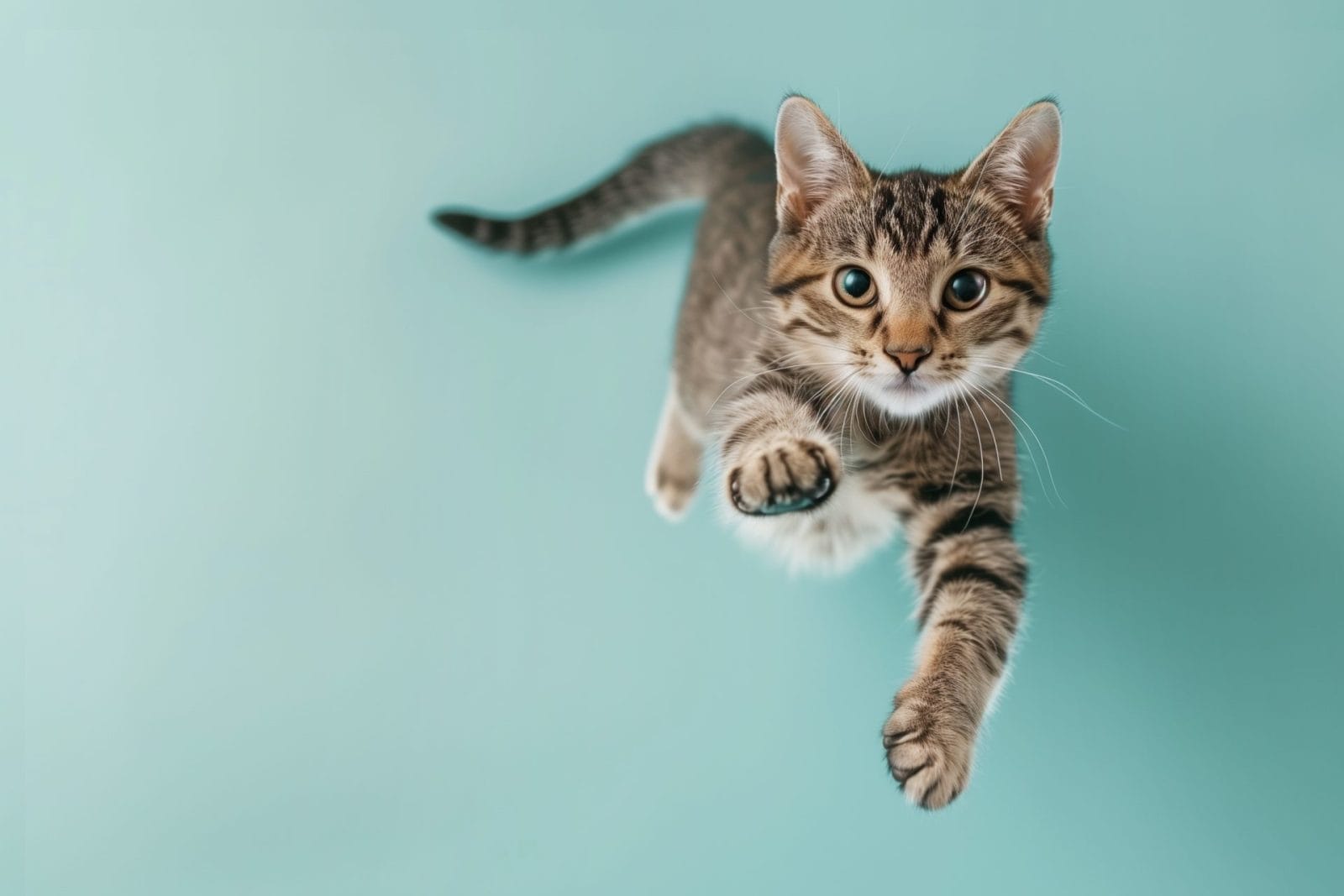
Image Credit: Josh Namdar/Shutterstock
For brands
Want to reach our audience?
Cats are quite vocal, and each noise they make serves a specific purpose in communication. While most cat sounds, like meows and hisses, have clear meanings, the softer chattering noise that cats sometimes make—especially when spotting prey—remains a mystery. According to cat behaviorist Mikel Delgado, these sounds are not directed at humans or other animals. As he explains, “It’s very hard to say what exactly is going on, but it doesn’t appear to be communicating to us or to other animals.”
The challenge in studying this particular behavior arises from the independent nature of cats, making them difficult subjects for laboratory research. While there are currently no studies that examine cat chattering directly, a few hypotheses have been proposed by both researchers and cat parents.
One theory suggests that this chattering could stem from frustration. As Delgado notes, cats might see their prey but be unable to reach it due to some barrier. This vocalization could be an expression of annoyance or even excitement, similar to how humans might grumble when they are irritated. Delgado points out that “It doesn’t necessarily have to be a negative experience,” highlighting that these sounds could simply reflect a specific feline emotion. However, he also emphasizes the difficulty in verifying this hypothesis scientifically, suggesting that understanding the context and emotional response behind the behavior would require complex experiments, including the measurement of physiological stress markers.
Another intriguing idea is that this chattering might serve a sensory function. Jonathan Losos, an evolutionary biologist, suggests that cats could be using this behavior to enhance their sense of smell. He explains that by opening and closing their mouths, cats might direct airflow toward the vomeronasal organ, also known as Jacobson’s organ, located on the roof of their mouths. This organ acts like a second nose, allowing cats to detect certain chemicals in their environment. While this theory is compelling, Losos also acknowledges the challenges in designing studies to test it thoroughly.
A more scientifically grounded explanation involves the concept of mimicking. Losos references observations of a margay, a small wild cat, which was reported to make calls similar to those of small monkeys when attempting to hunt them. This behavior suggests that some predators might imitate the sounds of their prey to attract them. In the case of domestic cats, their chattering can resemble the chirping of small birds—common prey for them—indicating that they could be trying to lure their target.
Despite these insights, the phenomenon of mimicking remains poorly documented within the broader cat family. Losos highlights the importance of studying wildcats, including the North African wildcat, the ancestor of domestic cats, to better understand whether certain behaviors are inherited or developed through domestication.
Please sign this petition to Help Ensure People in Mental Health Crises Receive Help to Prevent Animal Abuse!
Being publicly-funded gives us a greater chance to continue providing you with high-quality content.Click here to Support Us
Related Content:
- Dolphins Have to Shout at Each Other to Communicate Over Human-Generated Noise, New Study Finds
- Surprising Genetic Findings from Study of Wild and Domesticated Rabbits
- Dogs Versus Cats, Study Reveals Seemingly Uneven Attachment by Humans
- Dog’s Head Tilt May Indicate They Are Trying to Process What You’re Saying, Finds Study
- New Study Proves Unique Social Abilities in Cats
Easy Ways to Help the Planet:
- Eat Less Meat: Download Food Monster, the largest plant-based Recipe app on the App Store, to help reduce your environmental footprint, save animals and get healthy. You can also buy a hard or soft copy of our favorite vegan cookbooks.
- Adopt-a-Pet: Visit WildWatchers, a watchdog platform specifically designed for animal, earth, and wildlife warriors to actively give back, rescue, and protect animals and the planet.
- Reduce Your Fast Fashion Footprint: Take initiative by standing up against fast fashion Pollution and supporting sustainable and circular brands like Tiny Rescue that raise awareness around important issues through recycled zero-waste clothing designed to be returned and remade over and over again.
- Support Independent Media: Being publicly funded gives us a greater chance to continue providing you with high-quality content. Please consider supporting us by donating!
- Sign a Petition: Your voice matters! Help turn petitions into victories by signing the latest list of must-sign petitions to help people, animals, and the planet.
- Stay Informed: Keep up with the latest news and important stories involving animals, the environment, sustainable living, food, health, and human interest topics by subscribing to our newsletter!
- Do What You Can: Reduce waste, plant trees, eat local, travel responsibly, reuse stuff, say no to single-use plastics, recycle, vote smart, switch to cold water laundry, divest from fossil fuels, save water, shop wisely, Donate if you can, grow your food, volunteer, conserve energy, compost, and don’t forget about the microplastics and microbeads lurking in common household and personal care products!
Discover Our Latest Posts





Sign Up
Newsletter
Get your favorite articles delivered right to your inbox! Sign up for daily news from OneGreenPlanet.
Support
Keep One Green Planet independent — chip in what you can, or become a member and get ad-free browsing, a voice in our community, and the good feeling of fueling a sustainable, healthier, and kinder world.




Comments: