
Vegan Recipe App
T-Shirts for Activists
Newsletter
Become a Member
Partner with us
Cookbooks
Petitions
Product Features
Adopt-a-Pet
Get thousands of vegan, allergy-friendly recipes in the palm of your hands today!
X
Get your favorite articles delivered right to your inbox!
X
1.9K Views
1 year ago
Why You Should Prune Your Fruit Trees Before Spring (and Tips on How to Do It)
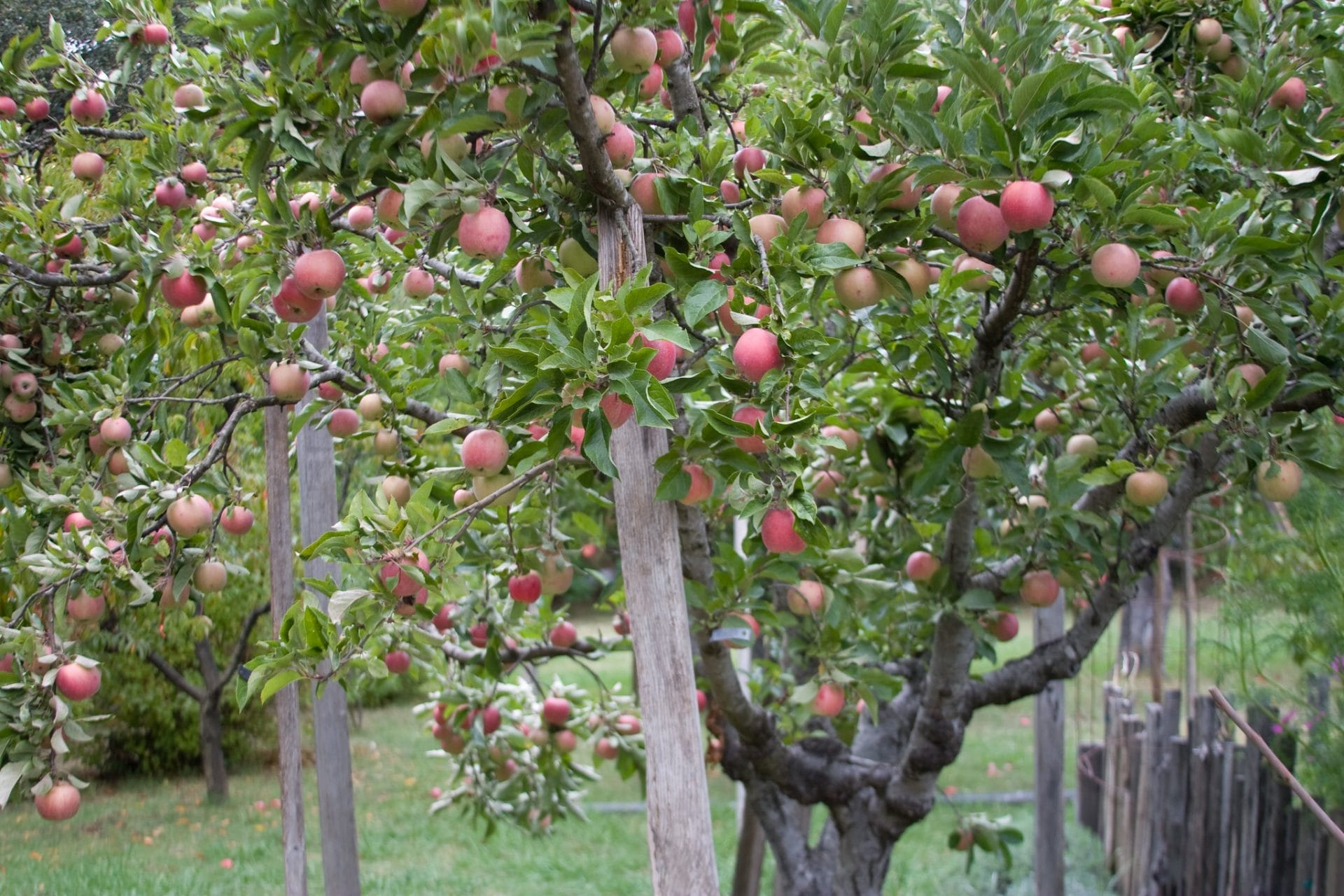
Image Credit: Brad Greenlee/Flickr
For brands
Want to reach our audience?
For those lucky enough to have already planted fruit trees, it’s good form to spend a little time each winter pruning them. Think of it a bit like an annual haircut: While at times we might let our hair grow wild (2020 being a prime example), we eventually need to tame the beast, else it might drive us crazy.
In the wild, trees regularly self-prune. That’s why a walk in the woods (or even the backyard after a windstorm) will often consist of stepping over fallen branches and such. In essence, when we prune our fruit trees, we are both making this natural process more efficient and styling the trees, a la hair, so that they are easier to manage.
If all of that sounds super groovy, and it is, then it’s time to delve into exactly why we prune fruit trees at certain times, what good it does and how we should go about it.
Why We Prune Fruit Trees When We Do
Source: The Gardening Channel With James Prigioni/YouTube
At its most basic, the best time to prune fruit trees is when they are dormant. The dates of this will vary slightly in relation to the growing zone they are in, but in most cases, this means between late fall and early spring. In other words, we want to do this after the leaves fall and before they return.
There is sound data for why this is the best time:
- It’s less stressful on the tree, somewhat like performing surgery with the patient asleep.
- Without leaves are fruit in the way, it’s easy to see the branches we are pruning.
- Winter, a time in which most life forms are less active, also offers the tree protection from infection and pests. The cut area is an open wound.
- There’s also more time in the winter. We are dealing with vegetable gardens or lawns.
What a Good Pruning Does
While trees probably aren’t quite as vain as humans, the reason we prune is not dissimilar to practice good hygiene. Sure, trees naturally grow the way they do, but so do fingernails, earwax, pimples, and rashes. Just because something is natural doesn’t mean it wouldn’t benefit from some maintenance assistance.
For those of growing fruit trees to harvest fruit, pruning provides some notable services:
- Pruning helps to speed up new growth. Think of it this way: The tree is putting energy into growing the branches it has as opposed to the branches that have been pruned away.
- In addition, it allows us to shape the tree for maximum sun exposure and adequate air flow. Shaping also means we can keep branches off the house or from shading out the flower bed.
- It gets rid of dead and decaying branches, improving the overall health of the tree. It also prevents breakage that can occur from these unhealthy limbs falling.
- Perhaps most importantly in the case of fruit trees, pruning increases production. Again, the tree is putting its energy into fruiting as opposed to supporting dead weight.
How to Prune Your Fruit Tree
Source: LoveTheGarden/YouTube
Because all trees, like snowflakes, are different, pruning each one is a unique experience. Nevertheless, there are some basic ideas that transfer over each time. Knowing the end result we are after makes all the difference in how we go about a task. In the end, we want a fruit tree with plenty of sun exposure to all parts, with enough space for breezes to blow through and without dead or competing branches.
Without getting too persnickety about it, here’s the general gist of what to do, and this is a good order in which to do it:
- Firstly, remember to make cuts at an angle such that rainwater will roll off the cut.
- Take off all the dead or dying branches all the way back to their source. They aren’t going to do the tree any good.
- Cut away the secondary stems at ground level, the sucker growth shooting straight up into the sky, anything growing straight down and small branches growing back towards the center of the tree. These things will all cause issues rather than improve the tree.
- Make choices between branches that are going to grow into each other or already doing so. If they are both there, they’ll both suffer. If one is left, it’ll have the space to thrive.
- Finally, if the tree is still so robust as to have problematic branches, it’s time to decide based on how you’d like to shape the tree. For example, lots of people like to shape the trees into a goblet, keeping four or five big branches that start low off the stem and push outward, leaving the center rather open for sunlight to get into the middle.
Fruit Trees Are Wonderful Things
Fruit trees are a sound investment for any yard. Not only are they beautiful, but they are a great source of healthy, organic food for years to come. Once established, pruning is a once a year thing, becoming easier as the years pass and the basic structure is in place. Now, harvesting… that’s something altogether different and even more rewarding.
Related Content:
- Tips for Pruning Tomatoes
- Winter Care for Fruit Trees
- Why You Should Plant Fruit Trees in the Yard and How to Do It
- 7 Trees That Fruit in Winter
For more Animal, Earth, Life, Vegan Food, Health, and Recipe content published daily, subscribe to the One Green Planet Newsletter! Lastly, being publicly-funded gives us a greater chance to continue providing you with high-quality content. Please consider supporting us by donating!
Being publicly-funded gives us a greater chance to continue providing you with high-quality content.Click here to Support Us




Comments: