
Vegan Recipe App
T-Shirts for Activists
Newsletter
Become a Member
Partner with us
Cookbooks
Petitions
Product Features
Adopt-a-Pet
Get thousands of vegan, allergy-friendly recipes in the palm of your hands today!
X
Get your favorite articles delivered right to your inbox!
X
5 years ago
Tiny Computer on Snail Teaches Scientists About Species Survival
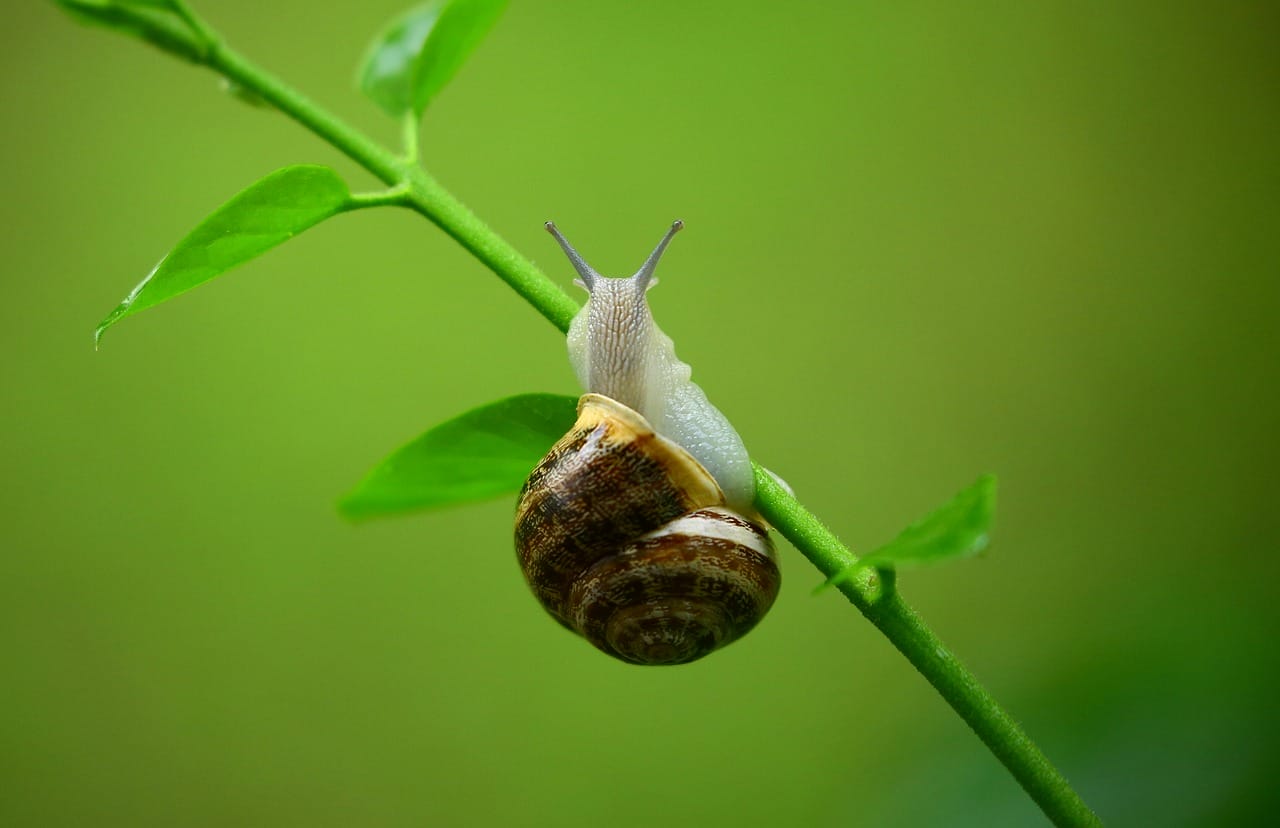
Image Credit: Pexels/Pixabay
For brands
Want to reach our audience?
According to The New York Times, a tiny computer was screwed onto the shell of a rosy wolf snail in Tahiti in 2017. The rosy wolf snail is carnivorous and has been at least somewhat involved in the extinction of up to 134 snail species globally.
The cute but dangerous species was brought to Tahiti decades ago, but against all odds, “the tiny yogurt-colored snail Partula hyalina” has managed to slip through the rosy wolf snail’s slippery fingers. By observing the data collected on predatory snail’s shells in the Partula hyalina’s habitat, scientists have figured out how the surviving snail’s shell is its key to avoid extinction.
While a 2014 paper by Dr. Cindy Blick and Diarmaid Ó Foighil suggested that the P. hyalina’s large amount of offspring has helped it survive, Dr. Foighil was not fully convinced. “It’s doing more than surviving,” he said.
The thriving snail’s success is in its pale shell. The rosy wolf snail has a dark shell and must spend most of its time in the shade to avoid drying out. However, the P. hylania’s milky shell can reflect light off of it, they can live in more sunny areas and avoid running into their carnivorous counterparts.
The computers created by David Blaauw’s engineering lab were slightly larger than aphids. After trial and error, Dr. Inee Lee and Dr. Blaaw “figured out how to glue a metal nut to the surface and screw the sensor into the nut”. The sensor would track how much sunlight the rosy wolf snail was receiving, and other sensors were placed around the P. hyalina’s habitat. They were not allowed to put computers directly on any P. hyalina’s because they are considered endangered.
Data showed that the P. hyalina’s habitat received 10 times as much sun as the rosy wolf snail. It’s an exciting discovery and supports efforts to conserve the pale snail’s sunny refuge.
Sign this petition to tell Congress to pass the Extinction Crisis Emergency Act, and to urge President Joe Biden to use the National Emergencies Act of 1976 to mobilize resources that will save animals’ and plants’ lives.
Urge the US Government to Address the Extinction CrisisClick Here to Sign Petition
Related Content:
- World’s “Most Beautiful Snail” Under Threat From Illegal Shell Trade
- 40% of World’s Plant Species at Risk of Extinction, New Report Finds
- Scientists Might Be Able to Predict Which Animals Will Survive Climate Change
- Study Finds Climate Change Could Make Animals Shrink in Size
- Climate Change to Increase Disease Risk for Animals
For more Animal, Earth, Life, Vegan Food, Health, and Recipe content published daily, subscribe to the One Green Planet Newsletter! Lastly, being publicly funded gives us a greater chance to continue providing you with high-quality content. Please consider supporting us by donating!
Being publicly-funded gives us a greater chance to continue providing you with high-quality content.Click here to Support Us
Discover Our Latest Posts









Comments:
Sign Up
Newsletter
Get your favorite articles delivered right to your inbox! Sign up for daily news from OneGreenPlanet.
Support
Keep One Green Planet independent — chip in what you can, or become a member and get ad-free browsing, a voice in our community, and the good feeling of fueling a sustainable, healthier, and kinder world.





Comments are closed.