
Vegan Recipe App
T-Shirts for Activists
Newsletter
Become a Member
Partner with us
Cookbooks
Petitions
Product Features
Adopt-a-Pet
Get thousands of vegan, allergy-friendly recipes in the palm of your hands today!
X
Get your favorite articles delivered right to your inbox!
X
8 years ago
7 Things the USDA is Doing Right, and 7 Things It Needs to Change
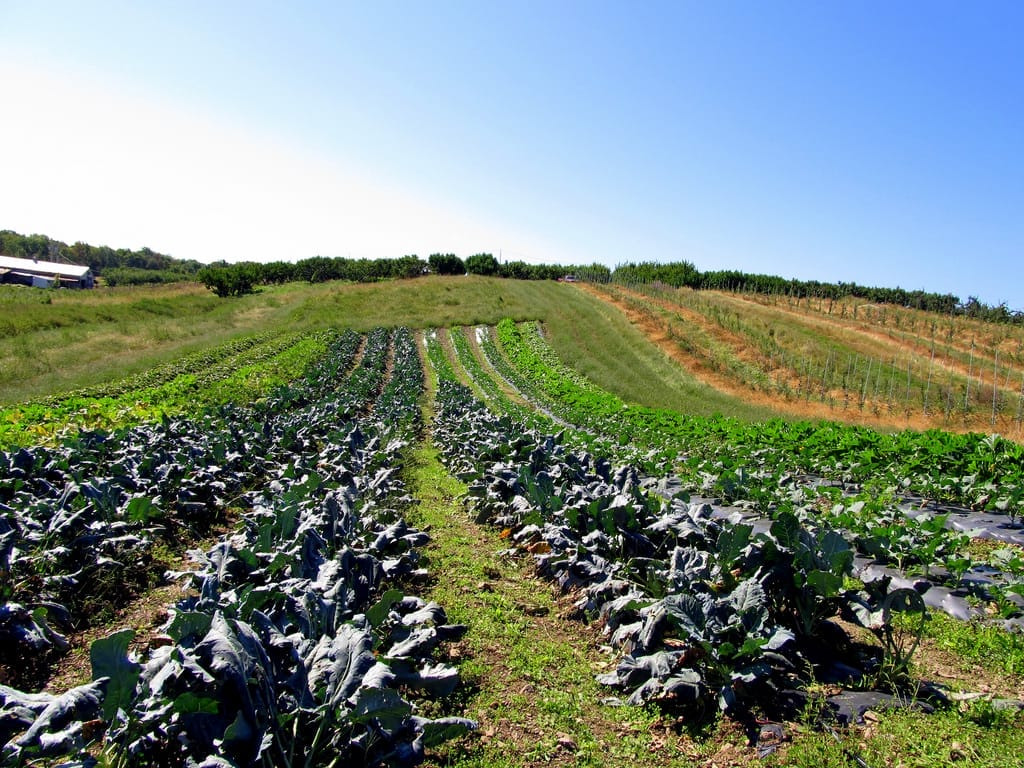
Image Credit: Amy / Flickr
For brands
Want to reach our audience?
The USDA is tasked with providing legislation and guidelines to encourage Americans to adopt healthy diets. But they are also involved in promoting and selling American agriculture and food products. During the Great Depression, when many Americans were struggling to get enough food, these incentives were aligned. Just after World War II, the USDA established the public school lunch program, and Americans benefited greatly from both the production of American food as well as the establishment of nutrition guidelines promoting a rich and varied diet.
In 2018, things are quite different. In the span of a few decades, Americans have on average gone from undernourished to overnourished, and certain agricultural practices that were once beneficial are partly to blame. For instance, the widespread cultivation of genetically modified corn has led to the production of corn that gets converted into highly processed food additives, like high fructose corn syrup, that are known to be unhealthy and obesogenic. In this sense, the USDA now has a major conflict of interest: how can they simultaneously promote sound nutrition guidelines and unhealthy food? There are many stakeholders and many different factions at play, but here are some of the best and worst decisions the USDA has made in recent years.

Massachusetts Office of Travel & Tourism / Flickr
7 Steps in the Right Direction
1. USDA Invested $40 Million in Infrastructure in Rural Communities
The USDA invested over $40 million in projects to help repair, enhance, or build infrastructure in rural communities in 2017. This included projects such as road renovation, water pipe repair, supporting housing developments, and public transportation improvements, thus helping improve the connectivity and quality of life in rural communities.
2. USDA Helps Rural Communities Restore Water Systems Damaged by Natural Disasters
The USDA awarded two grants, the Water and Waste Disposal Technical Assistance Training Grant and the Water and Environmental Programs Grantto help rural water systems recover from natural disasters, and to help in the event of future natural disasters. This helped give rural communities more access to clean water.
3. USDA Invests $1 Billion to Improve Health Care in Rural Areas
In 2017, the USDA invested more than $1 billion to improve access to health care in rural communities, through the Community Facilities Direct Loans Program. This included funding the building of new health clinics, which will also provide new jobs for rural citizens.
4. USDA Invests in Broadband Infrastructure in Underserved Rural Areas
The USDA’s Telecommunications Program invested more than $200 million in 2017 to bring broadband to rural communities through the. In West Virginia, schools, households, businesses, and community facilities received funding for broadband internet, thus increasing economic and educational opportunities for rural citizens.
5. USDA Invests $2.5 Billion in Rural Electric Infrastructure
In 2017, through the USDA Rural Development’s Electric Program, $2.5 billion was invested in rural electric infrastructure improvements. Communities in 27 states received grants to build new transmission and distribution lines, upgrade networks and facilities, and manage the power grid more effectively, including the introduction of “smart grid” projects.
6. USDA Partnership to Increase Access to Healthy Food in Rural Communities
At the beginning of 2017, the USDA announced a partnership with the Reinvestment Fund that would allow rural citizens in underserved communities improved address to healthy foods. Numerous grants were awarded for projects to build new grocery stores and improve existing grocery stores, making healthy foods available and affordable to rural citizens.
7. USDA Invests $8 Million to Support Production of Advanced Biofuel
In 2016, through the USDA’s Advanced Biofuel Payment Program, more than $8 million was invested in advanced biofuel production and renewable energy facilities. Various waste products, including crop residue, food and yard waste, vegetable oil, and animal fat can be turned into biofuel. Additionally, the USDA supports research on the production of new biofuels and other renewable energy.
It’s worth noting that only one of these seven steps, all of which came directly from the USDA website, involves actual food. And because all of these steps are aimed at improving underserved rural communities, it is also worth noting that rural areas are where the vast majority of American agriculture is grown. In fact, thanks in part to USDA subsidies and also in part to overproduction, the price of corn has become so cheap that rural farmers who grow this crop often struggle to Support themselves.
While the USDA has made some strides forward in improving the quality of life for those in rural communities, they’ve also made decisions that could have harmful effects on many Americans’ health.
7 Steps in the Wrong Direction
1. USDA Removes Animal Welfare Information from its Website
Last year, the USDA removed information about animal welfare in research laboratories, zoos, dog breeding operations, and other animal facilities from its website. The move was seen by Animal rights groups as a way to hide atrocious practices that cause animals to suffer from the public view.
2. USDA Sued for Missing Deadline to Publish GMO-Labeling Study
The USDA has long been resistant to providing disclosure on the GMO labeling issue, but in 2017 they were actually sued for failing to meet a deadline to publish a study on the matter. The USDA arguably has a lot to lose from a law requiring GMOs to be labeled, as many of the staple grains we grow in the US are GMOs (mainly corn and soybeans), and variants of these become ingredients in nearly all processed foods produced in the US. This issue still has yet to be resolved within the USDA.
3. USDA Nutrition Guidelines Encourage Egg and Meat Consumption
Despite years of controversy regarding egg consumption, in 2016 the USDA reversed course and stated that eggs “can be part of a healthy eating pattern,” backtracking on former statements. Similarly, despite an official report from the WHO labeling certain meats as carcinogenic, meat consumption was encouraged, particularly “lean meat.” This was a controversial decision, as the guidelines were published shortly after the WHO findings. These mixed messages add to the confusion and misinformation that already inundates Americans regarding nutrition.
4. USDA Nutrition Guidelines Fail to Mention Connection to Climate change
This same report from 2016 made another fatal flaw: it left out any connection between agriculture and environmental health, angering many environmentalists. Given the substantial evidence that agricultural practices are among the leading causes of global climate change, it is no longer feasible to make dietary recommendations without considering which practices are sustainable and which are not.
5. USDA Backtracks on Obama Era School Lunch Standards
Despite the modest progress made on improving school lunches during the Obama administration, the current administration has plans to relax the guidelines on grains, salt, and milk. The argument is that children don’t want healthier food, but whether or not they want healthier food, making their food less healthy is certainly a step in the wrong direction.
6. USDA Crop Subsidies May Contribute to Poor Health
The subsidies the USDA provides for certain crops have long been criticized for a multitude of reasons, among them the unfair market they create that contributes to poverty among rural farmers (mentioned earlier) as well as the promotion of the unhealthy, heavily processed foods which are made from these crops. Yet despite bipartisan Support for reform, they have yet to make significant changes to their subsidy rules. Corn continues to be the top crop for subsidy payments.
7. USDA Increases Meat Portion Sizes in School Lunches
In 2014, the USDA increased portion sizes for the meat it would serve in school lunches, a change it said would be permanent. This move came as a result of parents complaining that their children didn’t have enough to eat, but portion sizes were never the problem. They also increased portion sizes for whole grains, for the same reason, but children who were not finishing their smaller portion sizes certainly wouldn’t finish a larger portion size. Clearly this is not a good solution to this problem.
The USDA has been involved in a number of controversies over the years, many stemming from the conflict of interest between nutrition and agricultural subsidies that has arisen in recent decades. Hopefully, the organization continues trying to remedy problems it has created, but in the meantime, we don’t have to wait for mandates and recommendations from the USDA to start making changes at home, and in our local communities. For example, this NYC public school has found success serving all vegetarian school lunches!
Lead Image Source: Amy / Flickr
Discover Our Latest Posts








Comments:
Leave a Comment
You must be Login to post a comment.
Best Online Spell Caster Reviwes
My world was falling apart. My mind, for some reason, wont let go of the memory of My Wife. I had a very big problem with my wife few months ago, that lead to her leaving me. All efforts to get her back proved abortive. one day while going through the internet i saw so many testimony of this great man called Dr.Goodluck and how he helped people with all kinds of problem, his advert was everywhere,. Although I never believed in spell casting, but I had no choice than to give him a try so i contacted Him, I was so desperate to have my wife back with me once again. So I did all he told me to do. He told me that my wife will come back to me in the next 17hours after the spell is completed. I was skeptical. He casted the spell for me and i was so anxious waiting to see or hear from her, it was just 14hours after the spell was done my wife called and said she was coming HOME and she was asking for forgiveness for her ever hurting me before…..It was a dream come through for me!!! that was how my family and relationship was save and our relationship is now stronger than ever.my advice to you out there facing same problem or even worst then mine cry no more and contact this great man called Dr Goodluck He is capable of handling any kind of problem.
Contact him with his Email him at: goodluck05spellcaster@gmail.com
Call or Whats-app him: +2348138654465
website:https://drgoodluck.simplesite.com