
Vegan Recipe App
T-Shirts for Activists
Newsletter
Become a Member
Partner with us
Cookbooks
Petitions
Product Features
Adopt-a-Pet
Get thousands of vegan, allergy-friendly recipes in the palm of your hands today!
X
Get your favorite articles delivered right to your inbox!
X
3.9K Views
9 years ago
How to Forage Your Own Ginseng
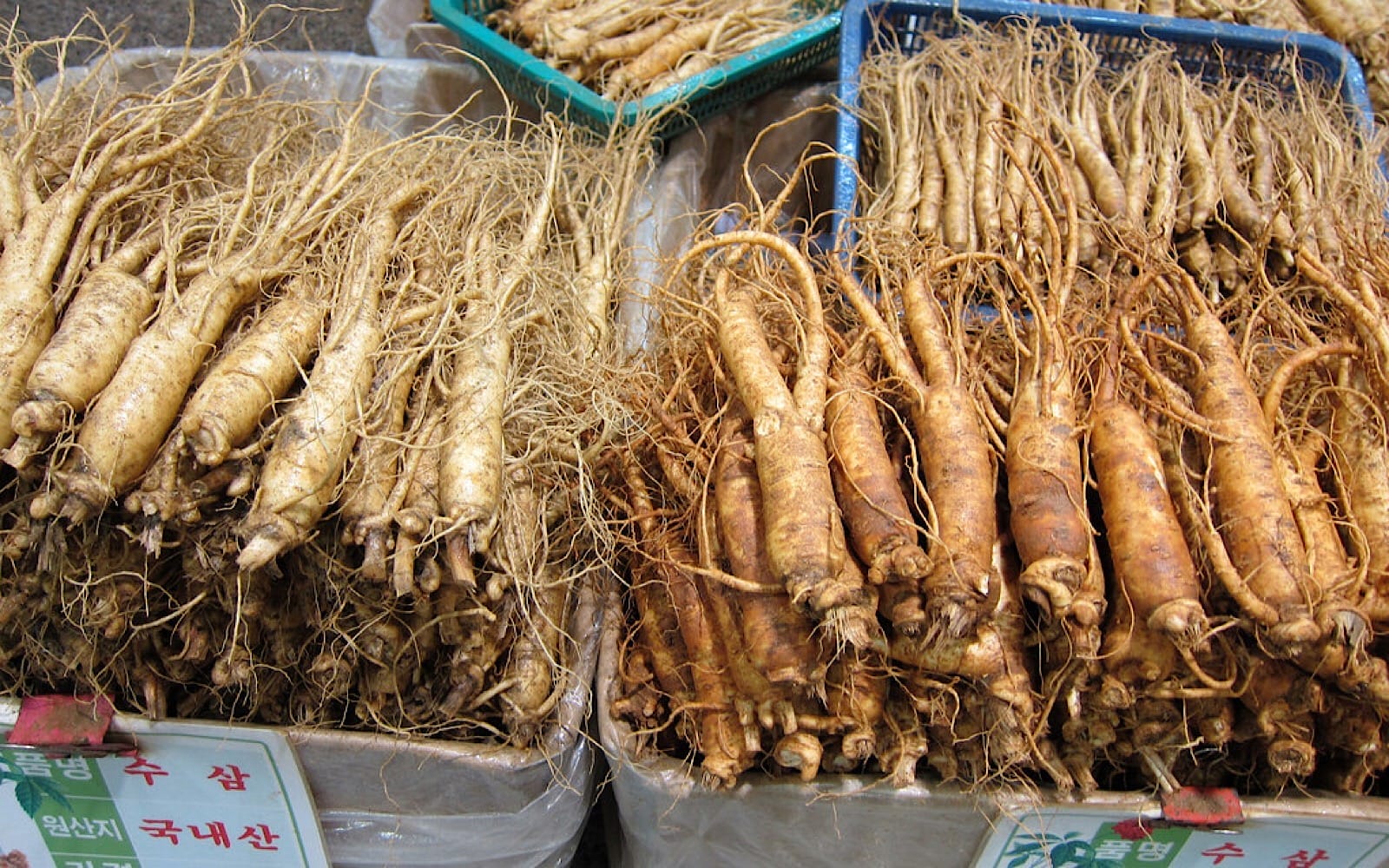
Image Credit: Eekim/Flickr
For brands
Want to reach our audience?
Ginseng is most often related to Chinese medicine. In reality, however, there are two other species of ginseng, one from the U.S. and another from Siberia. Wherever it is from, the fact of the matter is that ginseng has to grow for a long time — five to ten years — before it is harvested, and it brings top dollar for growers and, more so, for foragers.
Ginseng is highly prized for its root, which is said to resemble the human body when it (the root) is fully developed. It’s a beloved herbal medicine, known to be beneficial for diabetics, decrease blood sugar levels, boost immune systems, as well as having anti-aging chemicals. However, ginseng does have specific effects on blood pressure, which are enhanced when accompanied with caffeine, so it is important to err on the side of caution when using it.
In the U.S., for those with sharp eyes, a keen awareness of their whereabouts, and an affinity for being in the forest, it is entirely possible to forage ginseng, but it’s also incredibly important to do so responsibly.
General Info

Eekim/Flickr
Chinese (or Korean) ginseng and American ginseng are, by far, the better known of the three varieties, and supposedly, they provide somewhat opposite effects. The Korean version is said to be stimulating, with a warming influence, what is referred to as “yang”. American ginseng, however, is “yin” and believe to have a calming, cooling effect.
Regardless, both varieties are from the same family, Araliaceae, and they are perennial plants, meaning that — unlike many food plants — they don’t die after a season and have to be replanted. They grow in cool, temperate climates (the northeastern side of the U.S. and southeastern Canada, stretching west to Oklahoma and north to Minnesota), and unusually, ginseng prefers to grow beneath dense forest canopies.
Like most plants, ginseng has particular growing conditions, and unlike most plants, it is typically very fussy about it. Besides the shade, ginseng likes acidic soil, which is common for forests. The soil needs to be well-draining, high in organic matter, and rich in calcium. It also requires distinct seasons, which never get too hot and have low humidity. A good indicator of ginseng possibilities is if apples grow well and if ferns abundant, the spot has potential.
Ginseng Is No Joke
In the foraging world, especially the one that is income-based, there are certain prizes whose location are heavily guarded. For example, the location of morel mushrooms, which come up in the same place each year and fetch over $100 per pound (dried), are not often revealed to others. Wild ginseng, the priciest of forage crops, can bring in as much as $400 a pound (dried), so discovered sites are usually kept secret.
This, in part, is because of the money involved, but it is also really important in terms of sustainability. Ginseng plants will readily reproduce and are usually found amongst other ginseng plants, but they take years to provide a crop. Responsible, professional foragers are careful to only take a small percentage of the plants, which die when harvested, and they always plant a new seed or two to replace the harvested ginseng.
Because it does bring such a hefty reward, ginseng has definitely been over-harvested in recent years, and some states have strict regulations, including licensing and limited seasons. In other words, before going out to forage for it, it’s probably a good idea to check out the status of ginseng where you are, as well as any laws that are in place.
Identifying Ginseng

Ginseng, being a plant, is stationary, and being a perennial plant, it comes back year after year. However, above the ground, it does die every year because, unlike most perennials, ginseng doesn’t have a woody stem. Usually, the fall is the appropriate time for foraging, and at that point, identifying ginseng is a little easier because it has fruited. Ginseng has red berries that look a bit like jelly beans, so that’s a start. However, other things also have red berries at this time.
When red berries have been spotted, the next step is to look at the prongs of the plant. Ginseng sends out leafy prongs from a central stem, and the general rule of foraging is to never harvest a plant with less than three prongs, which signifies it has reached a certain age. The prongs generally Support five leaflets, three large ones on a side and two small ones opposite them. A healthy patch should have plant specimens in all stages of growth: one, two, three and four prongs.
Using Your Harvest
Typically, foragers of ginseng are doing it for the money, but for those who want to use it at home for their own benefit, it’s easy. Dry the root and use it to make tea. The recipe calls for about three grams per cup of tea, steeped for five minutes in hot (not boiling) water, with whatever flavoring and/or natural sweetening agents you like. The same bit of root can be used to make two or three successive cups.
Have you ever foraged your own ginseng? Tell us in the comments!
Lead Image Source: Eekim/Flickr




Comments: